
Surroundings
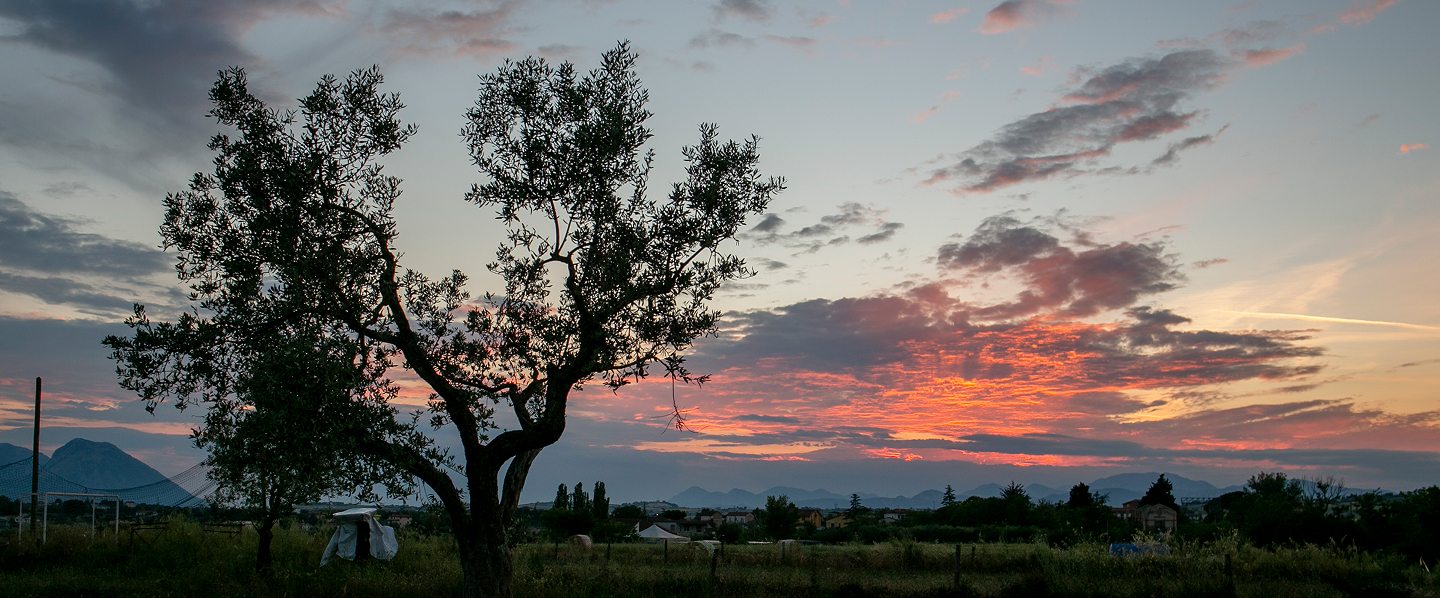
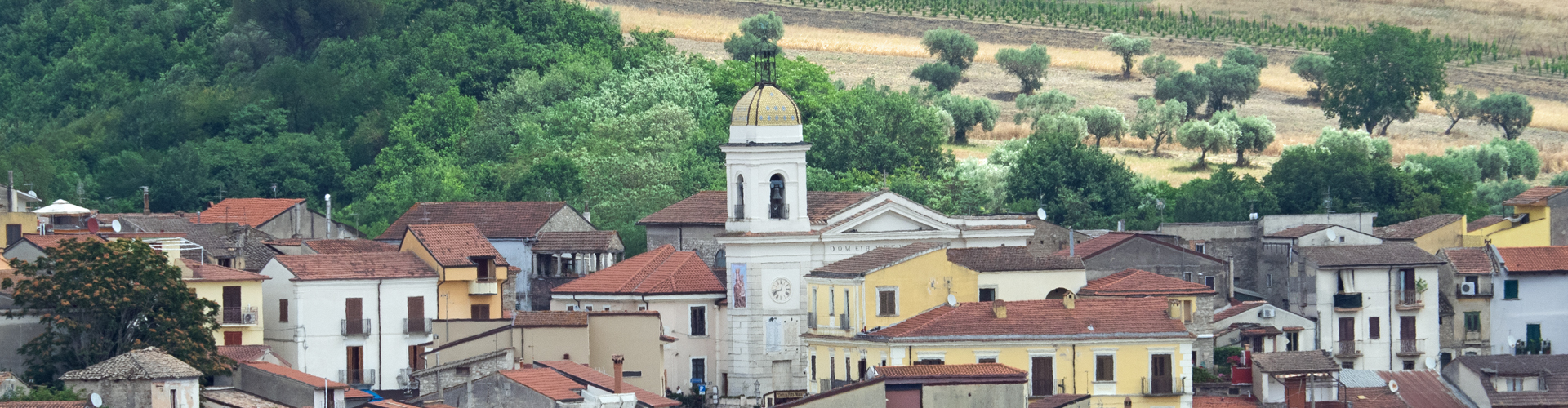
The farmhouse is located in the open countryside, about 1 km from the centre of Pietrelcina, a picturesque medieval village in the Benevento area of Sannio, famous for being the birthplace of Saint Pio of Pietrelcina. It is a popular pilgrimage destination thanks to its sites linked to the saint's life, such as his birthplace, the Church of Sant'Anna and the Piana Romana. Its historic centre, known as “Castello”, is a charming collection of narrow streets and ancient houses on a rocky spur, which retains its old-world charm, offering a true spiritual journey in the footsteps of Padre Pio.
Big bench
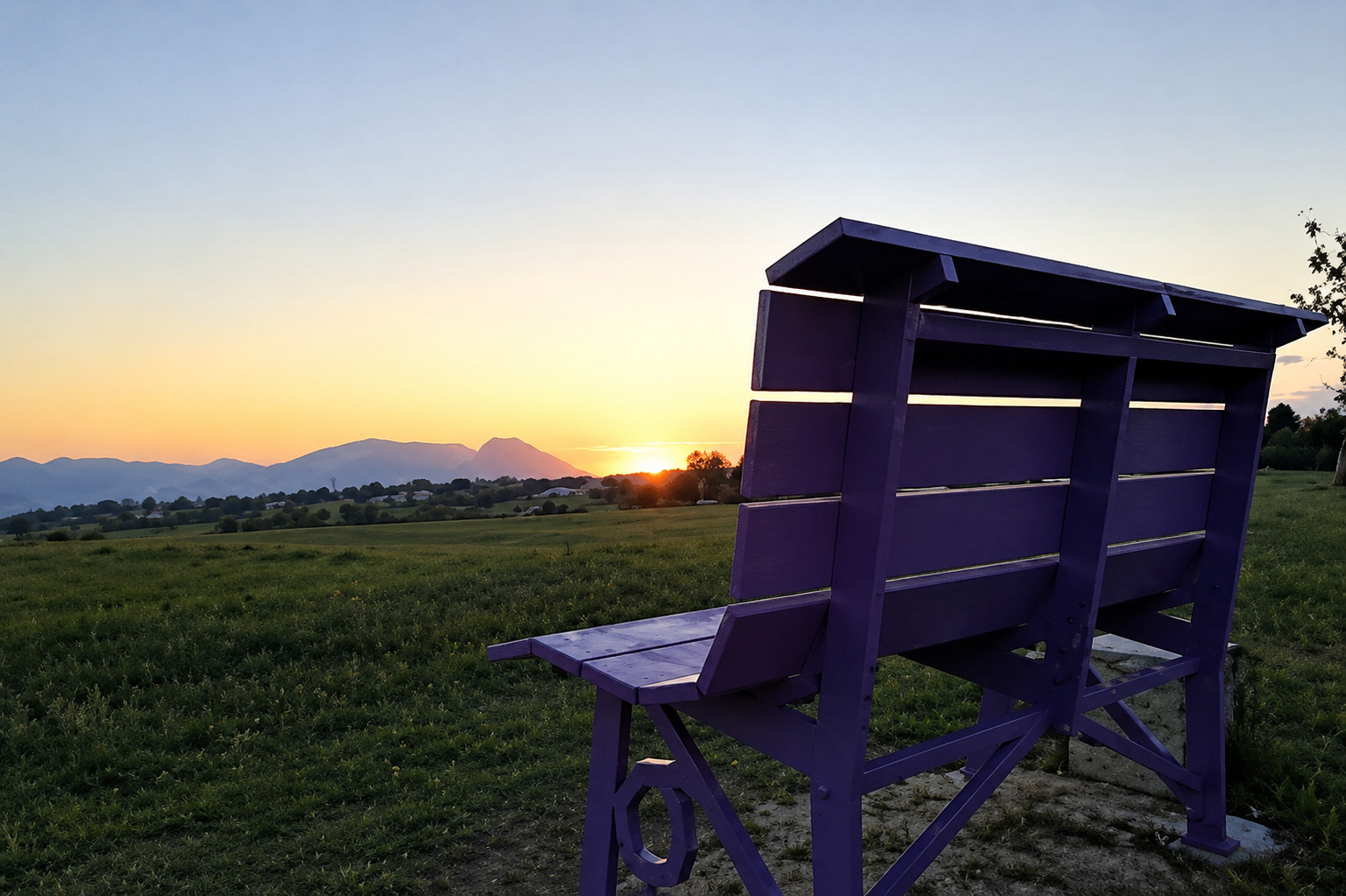
The Giant Bench of Pietrelcina
The Big Bench #444 is located on the grounds of the Masseria and is part of a network of giant benches placed in scenic locations throughout Italy to rediscover the pleasure of enjoying beautiful landscapes “through the eyes of children”. The Big Bench in Pietrelcina is located in a quiet spot, surrounded by nature and ideal for contemplative moments, with a view of the “Dormiente del Sannio” (Sleeping Beauty of Sannio).
The peaks of the mountains that form the Taburno-Camposauro massif outline the profile of a head on the horizon, with flowing hair cascading down from Mount Pentime towards the Calore River, the body sinuously reclining on the peaks of Camposauro and the legs stretched out on the slopes of Taburno.
Pietrelcina
Birthplace of Saint Pio
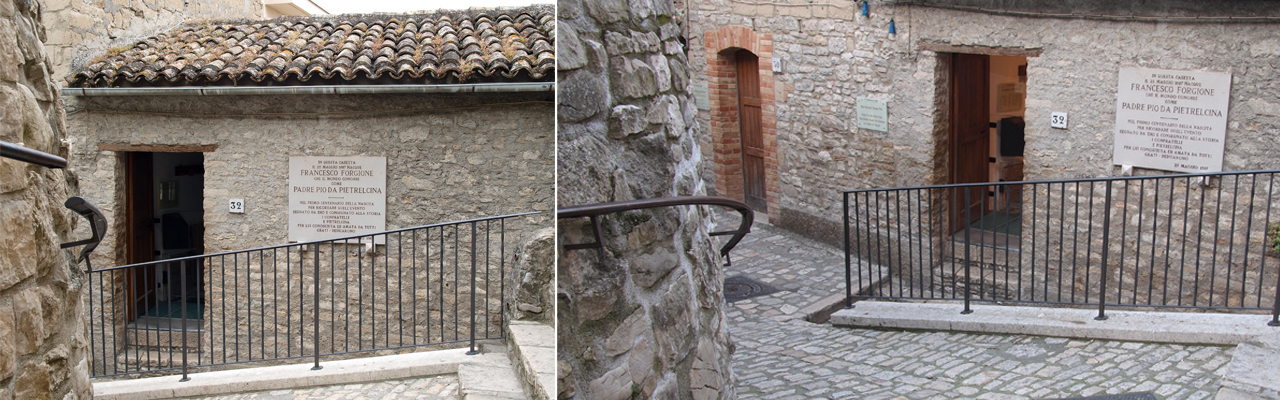
The medieval village of Pietrelcina, with its maze of narrow streets in Vico Storto Valle, is home to the house where, at five o'clock in the afternoon on 25 May 1887, little Francesco Forgione, son of Grazio and Maria Giuseppa de Nunzio, was born.
The room where Padre Pio was born was his parents' bedroom, which today bears the number 32. Underneath the floor of this room, connected by a wooden trapdoor, there is a room that was used as a stable and storeroom, where Grazio, Padre Pio's father, kept the donkey he used to travel to the countryside in Piana Romana, along the old “Rosario” road.
The kitchen has a separate entrance that opens directly onto the street. In this room (number 28) and in the one behind it, initially used as a bedroom for the Forgione children and later as a dining room, most of little Francesco's domestic life took place. The hearth, to the left of the entrance, brought the whole family together on long winter evenings, when they would gather around the warmth of the fire to discuss the hardships of farm work and recite the rosary. The utensils of the time are still present, hanging on the walls and in small niches, including some terracotta containers (“quartare”), pots and a petroleum lamp.
Pietrelcina
Parish Church of ‘Santa Maria degli Angeli’ and Diocesan Shrine of ‘San Pio’
Rebuilt after the earthquake of 1688 and consecrated by Cardinal Orsini in 1701, it was enlarged and modified in the following centuries.
This church is dedicated to the Madonna della Libera, patron saint of Pietrelcina, represented by a beautiful wooden statue from the Neapolitan school dating back to the first quarter of the 18th century.
Padre Pio celebrated his first solemn mass here on 14 August 1910 and many others during his time as a priest in Pietrelcina (1910 - 1916).
Access:
The building can be accessed through the main door located in Piazza SS. Annunziata.
There are steps at the entrance.
Easy access for people with motor disabilities (wheelchair accessible entrance - stone paved access ramp).
Pietrelcina
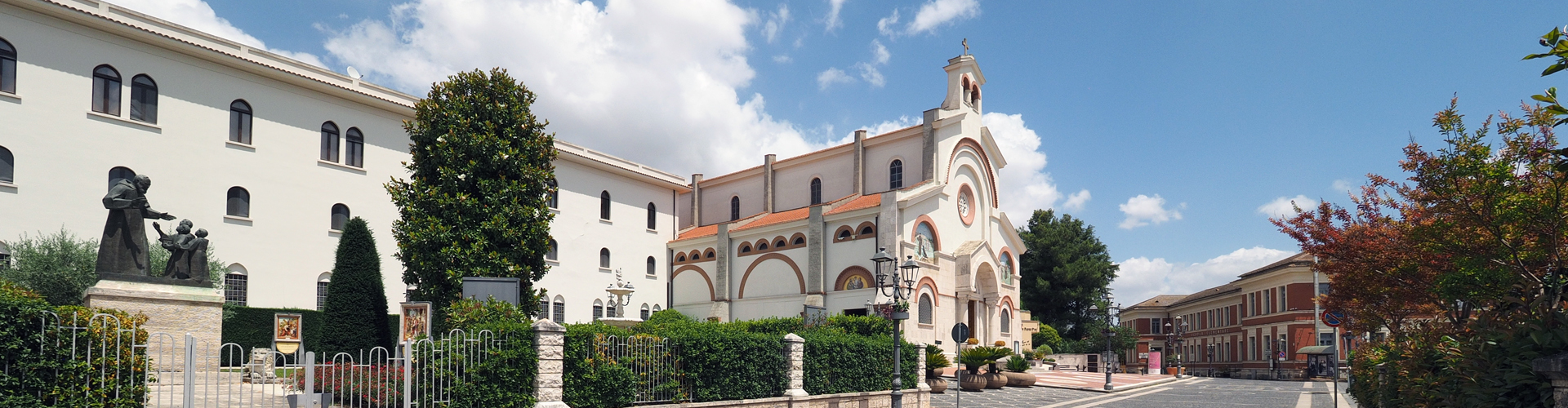
Church of the Holy Family - Capuchin Friars' Monastery
Church of the Holy Family
It was built at the express wish of Padre Pio. Work began in 1926 and was completed in 1951 with the consecration of the church. To the left of the church is an important seminary, while to the right is the ‘Padre Pio Museum’.
Monument to Padre Pio
It is located in the garden in front of the seminary. It is the work of sculptor D. Andreose and was inaugurated on 16 September 1971. The artistic group consists of a large figure of Padre Pio surrounded by children who joyfully offer him a small gift: a model of their seminary.
Access
The building is accessed through the main door located on Viale Cappuccini.
There are steps at the entrance.
Side entrance: Easy access for people with motor disabilities (wheelchair accessible entrance - access ramp at the side entrance).
Pietrelcina
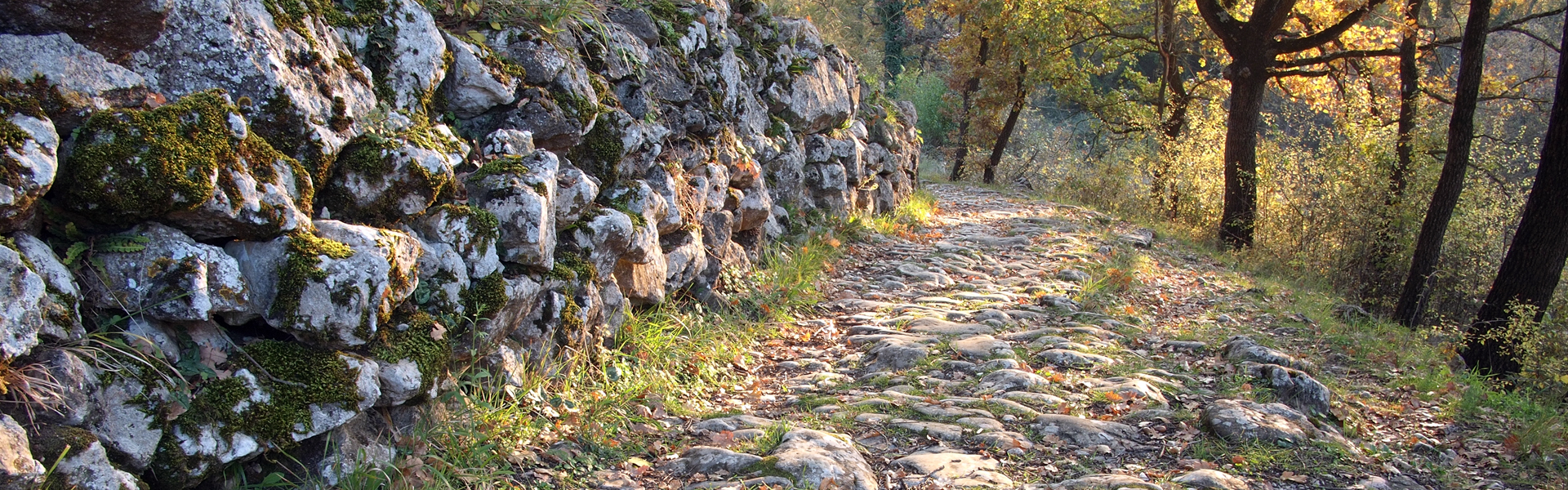
Rosary Walk
It is the country lane that leads from the town centre to Piana Romana. Along this road, crossing a small bridge, between climbs and steep descents, in serene solitude and reciting the Rosary, Padre Pio, as a boy, as a student and even as a priest, would go to the “masseria” (farm) that his family owned in Piana Romana.
Benevento
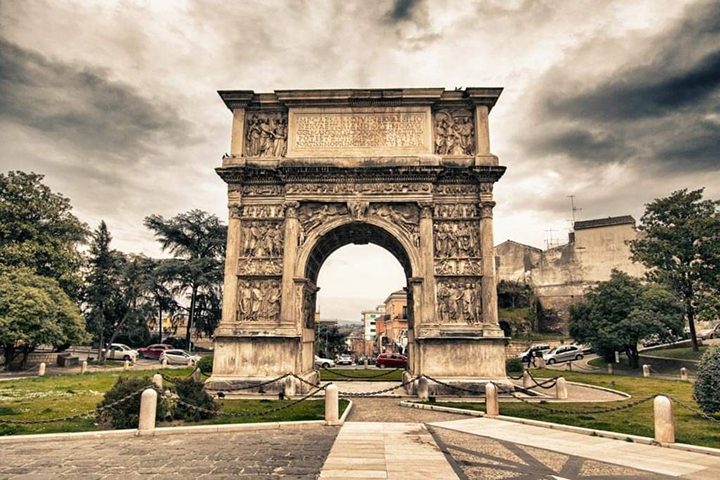
Arch of Trajan
About 15 km from Pietrelcina, in Benevento, stands Trajan's Arch of Benevento, a commemorative arch dedicated to Emperor Trajan on the occasion of the opening of the Via Traiana, a variant of the Via Appia that shortened the journey between Rome and Brindisi.
The monument, which has survived largely intact, including the numerous sculptural reliefs that decorate its surfaces, is one of the best-preserved Roman triumphal arches in the world.
The arch features rich sculptural decoration on its two main facades: on the inner facade, facing the city, there are scenes depicting peace and the emperor's benevolence towards the citizens, while on the outer facade there are scenes depicting war and the emperor's benevolence towards the provinces.